UXPin vs Cursor

UXPIN VS Cursor

A Design Surface vs an AI Code Editor

Cursor is an AI code editor where developers write and refactor code. UXPin is a design tool where the canvas renders real components and designers and developers work together. Here's what that means for your team.

50%

reduction in engineering time

8.6x

faster prototyping

3

designers supporting 60 products

The fundamental difference

UXPin is a connected system, not a single tool. Your real React component library syncs in through Merge; Forge generates with those exact components using AI; Wire turns the result into a working, shippable product. The three talk to each other — one source of truth, your components, flowing through design, AI generation, and build — and they come together in one environment, not metered or sold as separate add-ons. Most tools in this space do one thing. UXPin connects the whole path from design to working product.

Cursor is an AI-first code editor — a VS Code fork built around AI agents that write, refactor, and reason across a codebase. It's a developer environment. UXPin is a design tool with a visual canvas that renders real React components, where designers generate and refine UI and developers receive production JSX.

That's not a feature difference. It's a difference of who the tool is for and where the work happens. Cursor is where developers write code. UXPin is where the interface gets designed with real components before — or alongside — that code.
gif

Side-by-side comparison

Every row is a question you're actually asking — not a feature checkbox.

logo logo
Suite or point tool Connected suite — Merge, Forge & Wire, included together Point tool — code editor
Primary user Designers and developers together Developers
Surface Visual design canvas + code AI code editor (VS Code fork)
UI input Real synced components on a canvas Code, plus Figma screenshots as context
Design system Synced library, generated with directly Whatever is in the codebase / rules files
Visual design tools Full design suite on real components Element select/resize; not a design suite
Who refines visually Designers, visually — no credits per edit Developers, in code
Output Production JSX + a design source of truth Code in your repo
Collaboration Design + dev on one canvas Developer-centric
Best at Designing product UI with your components Writing and refactoring code fast
IDEAL USER Product/DS teams designing app UI Engineers building in an IDE

Suite or point tool

UXPin Connected suite — Merge, Forge & Wire, included together
Cursor Point tool — code editor

Primary user

UXPin Designers and developers together
Cursor Developers

Surface

UXPin Visual design canvas + code
Cursor AI code editor (VS Code fork)

UI input

UXPin Real synced components on a canvas
Cursor Code, plus Figma screenshots as context

Design system

UXPin Synced library, generated with directly
Cursor Whatever is in the codebase / rules files

Visual design tools

UXPin Full design suite on real components
Cursor Element select/resize; not a design suite

Who refines visually

UXPin Designers, visually — no credits per edit
Cursor Developers, in code

Output

UXPin Production JSX + a design source of truth
Cursor Code in your repo

Collaboration

UXPin Design + dev on one canvas
Cursor Developer-centric

Best at

UXPin Designing product UI with your components
Cursor Writing and refactoring code fast

IDEAL USER

UXPin Product/DS teams designing app UI
Cursor Engineers building in an IDE

Three pillars deep-dive

Where the architectural difference plays out in practice.

PILLAR 1

AI that uses your real components

Cursor is exceptional at code — multi-file edits, agents, codebase-aware generation. For UI specifically, it works from context such as Figma screenshots and the code already in your repo. It's a developer tool reasoning about code, not a design surface rendering your component library visually. UXPin's Forge generates on a visual canvas with your synced components — designers see and manipulate the real components, not a code representation of them. The two tools sit at different points in the workflow: design in UXPin, deep code work in Cursor.

PILLAR 2

Professional design tools for the last mile

Cursor can select and adjust UI elements, but it isn't a design suite — it's an editor. Visual refinement is a developer activity there, expressed through code and prompts. UXPin gives designers professional visual tools on real components, so the people who own the craft can refine the interface without writing code, and without burning AI credits per change.

PILLAR 3

Production code output

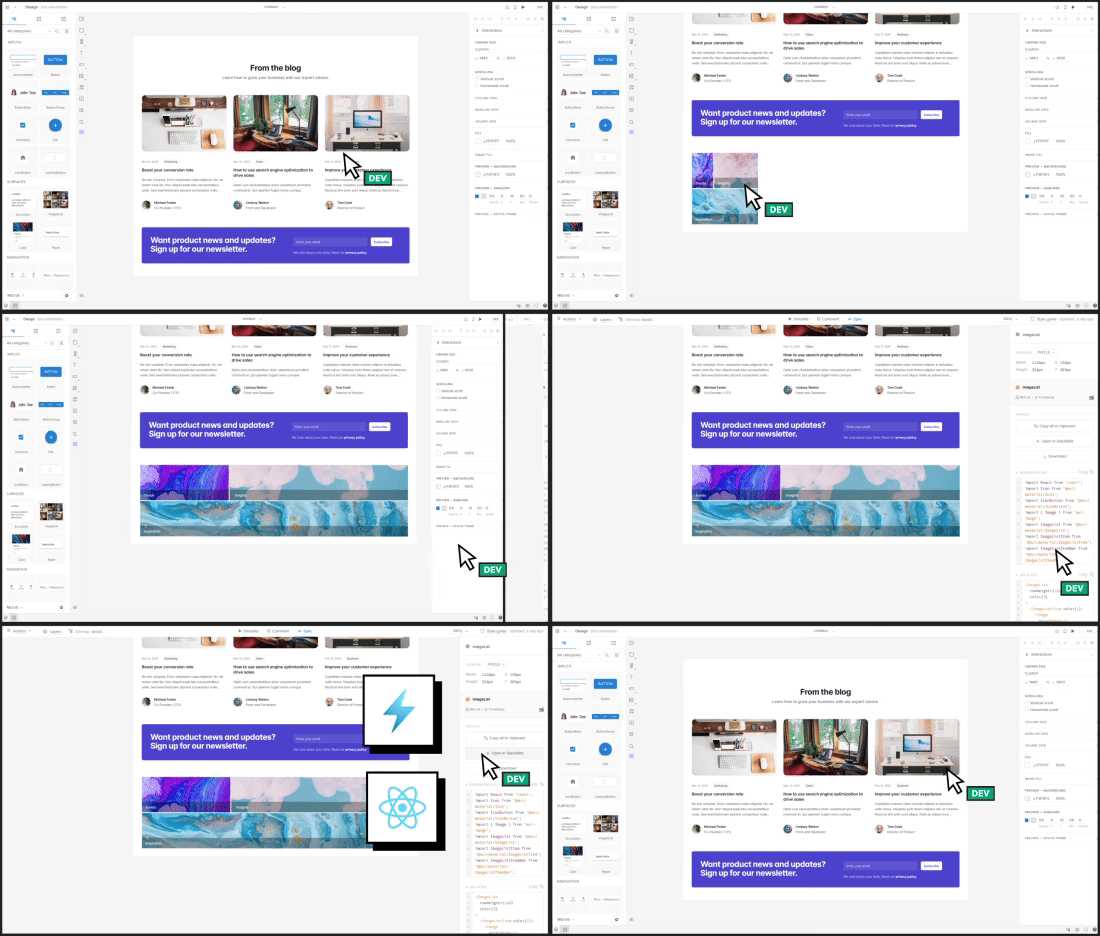
UXPin exports production-ready JSX referencing your actual component library — real imports, real props, working state. Developers copy it and integrate directly. Cursor produces code directly in your repo — that's its whole job. The distinction isn't code vs no-code; it's that UXPin adds a visual design source of truth built from your components, which a developer can then take into Cursor for deeper work. They're complementary more than competing.

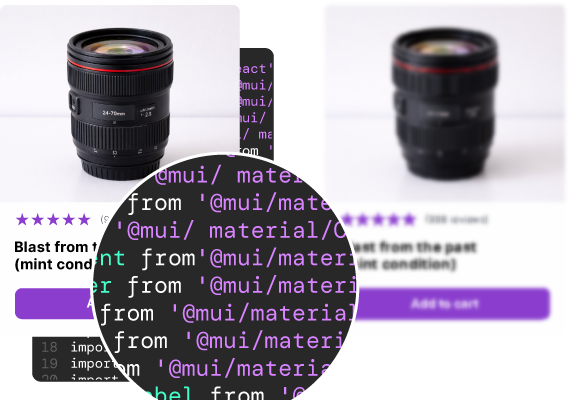
import Button from '@mui/material/Button';

import Card from '@mui/material/Card';

When to use each tool

Fair and specific. Both tools have real strengths — here's where each wins.

logo

Choose UXPin if...

Designers need to design product UI with your real components

You want a visual design source of truth, not just code

Design and engineering need to collaborate on the same interface

You want AI generation constrained to your design system

logo

Choose Cursor if...

Your work is primarily writing, refactoring, and reasoning about code

You're a developer who wants the most capable AI coding environment

You don't need a visual design surface for designers

Use both: This is the common case. Designers build product UI in UXPin with real components and export JSX; developers take that into Cursor for integration, refactoring, and the deeper engineering work Cursor is built for. Design source of truth in UXPin, code craft in Cursor.

quotation marks

What teams actually say

When I used UXPin Merge, our engineering time was reduced by around 50%. Imagine how much money that saves across an enterprise-level organization with dozens of designers and hundreds of engineers.

Larry Sawyer

Larry Sawyer

Lead UX Designer

50%

reduction in engineering time

8.6x

faster prototyping

3

designers supporting 60 products

Frequently Asked Questions
Cursor is an AI-first code editor (a VS Code fork) where developers write, refactor, and generate code with AI agents. UXPin is a design tool whose canvas renders real React components, where designers generate and refine UI and export production JSX. Cursor is for writing code; UXPin is for designing product UI with your components.
No. Cursor is a developer code editor with AI. It can pull Figma screenshots into context and adjust UI elements, but it isn't a visual design suite. UXPin provides the visual design surface, generating with your real components, that Cursor doesn't.
Yes — this is a common workflow. Designers build UI in UXPin with real components and export production JSX; developers take that code into Cursor for integration and deeper engineering. UXPin is the design source of truth; Cursor is the code environment.
Cursor works from what's in your codebase and from context you provide (such as rules files and Figma screenshots). It doesn't render your component library on a visual canvas the way UXPin does, where the AI generates directly with your synced components.
UXPin. It's built for designers to work with real components visually. Cursor is built for developers writing code. Many teams use both — UXPin for design, Cursor for engineering.

See the difference for yourself

Build a screen in Cursor. Build the same screen in UXPin Forge with your component library. Compare the output — and compare what developers can do with each.

design example